The comparison between AI and electricity is useful when it changes the questions a business asks. Access to a powerful technology is one decision. Redesigning work to use it well is another.
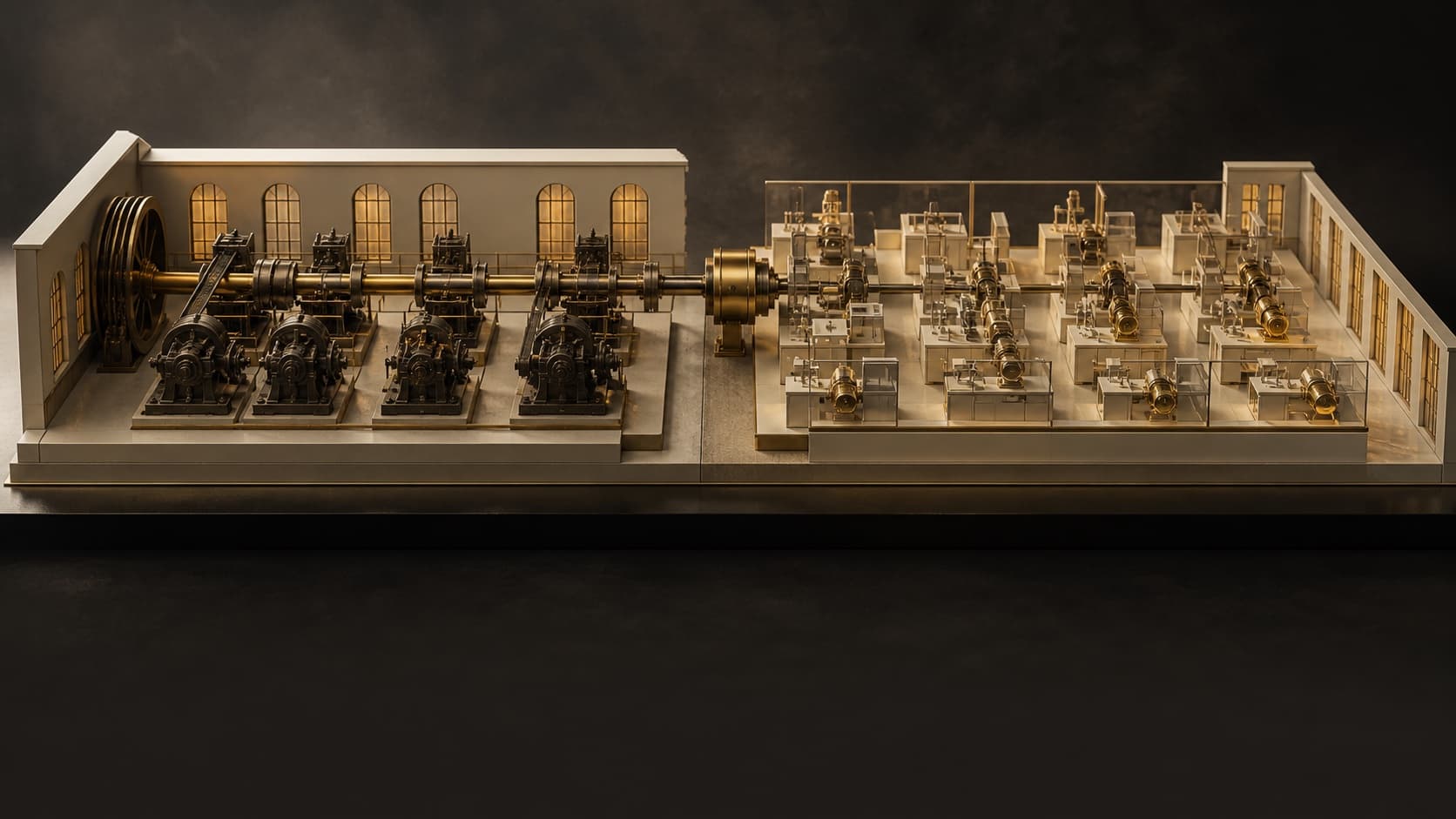
Factory electrification illustrates that distinction. Electric motors made new production layouts possible, including arrangements less dependent on a central mechanical drive. The lesson for AI is to examine the workflow around the tool, not simply install the tool and wait.
History is a lens, not a forty-year forecast
The familiar story says electricity arrived and productivity waited forty years. That is too neat. Adoption, organizational change, and measured gains varied. Research published through the National Bureau of Economic Research finds rapid and lasting manufacturing productivity gains from electrification, challenging accounts of a universal long delay.
We should not use the historical analogy to predict how long AI adoption will take, or to claim that every industry will follow the same path. It is more useful as a prompt to investigate how technology and operating practices interact.
Find the process that still assumes manual work
Consider a hypothetical review process. An analyst collects documents, transfers information between systems, prepares a summary, and waits for a manager to make a decision. Adding a drafting assistant may shorten the summary step while leaving collection, transfer, and waiting time intact.
A broader redesign could assemble evidence earlier, identify missing information, route cases by exception type, and give the reviewer a consistent decision package. Human judgment remains, but its inputs and timing change.
That is the operating-model question: how should the work run when preparation can be partly automated?
Redesign one workflow before scaling
Map the existing process with the people who perform and approve it. Identify the information needed at each decision, the authority to act, and the reasons work returns for correction.
Then choose a bounded change. Establish a baseline, test representative cases, and compare the complete result. Include the effort of review, operation, and maintenance; a faster model response is not the same thing as higher productivity.
Put business and engineering decisions together
A process owner knows what makes a result useful. An engineer can assess data access, integration constraints, and model behavior. They need to make tradeoffs together rather than exchange a roadmap and a backlog through a long handoff.
Our AI strategy approach brings those perspectives into the same engagement. Change management addresses how responsibilities, skills, and working practices evolve alongside the software.
The practical lesson from electrification is a question worth asking now: which part of this process exists because of an old technical constraint, and what evidence would justify changing it? Start there, then use the first production result to inform the next investment.